

Can you chase crypto upside without blowing up your portfolio?
Core-satellite does that by putting 70–80% into a low-cost, diversified core and 20–30% into small, tactical satellites.
The core is broad-market ETFs plus anchors like Bitcoin and Ethereum.
Satellites are sector ETFs, a few high-conviction stocks, or select altcoins and DeFi tokens, usually 1–5% per position.
Thesis: keep a dominant, stable base to capture market returns, while using tiny, rule-driven bets for extra upside and tactical diversification.
Core-Satellite Investing Overview for a Stocks-and-Crypto Portfolio
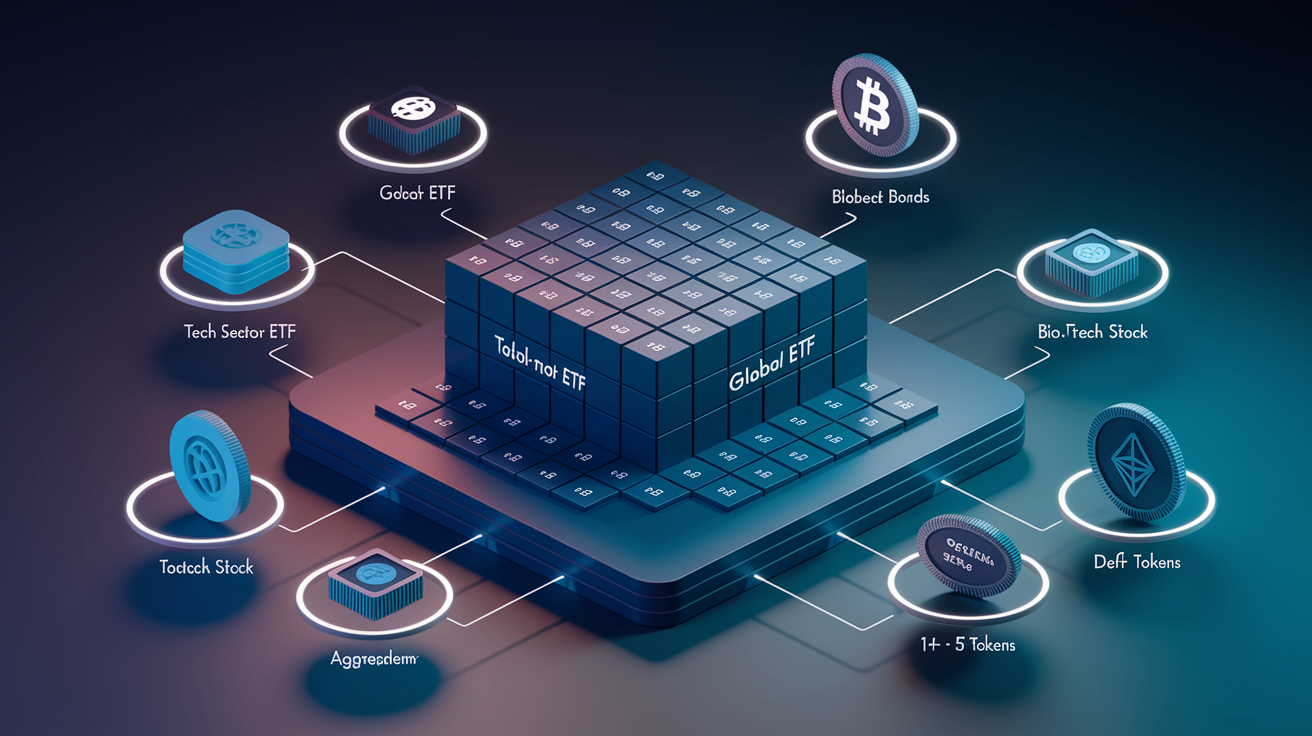
A core-satellite portfolio splits your assets into two layers: a big, low-cost, diversified core that delivers stable returns, and smaller, riskier satellite bets aimed at beating the market or grabbing tactical exposure. The core usually takes up 60–90% of your money. Satellites get 10–40%. This works for stocks, bonds, and crypto. Bitcoin and Ethereum anchor your crypto core. Altcoins and DeFi tokens sit in satellites. The idea’s pretty straightforward: let a broad base capture long-term gains while you selectively chase extra alpha through smaller, carefully sized positions.
When you’re mixing stocks and crypto in one portfolio, splits often land around 70/30 or 80/20. Seventy to eighty percent goes into core stuff (total-market ETFs, large-cap index funds, Bitcoin, Ethereum), and twenty to thirty percent spreads across satellites (sector ETFs, individual stocks, factor plays, altcoins, DeFi protocols). Say you put 50% in a total U.S. equity ETF, 15% in Bitcoin, 5% in Ethereum, then carve the remaining 30% among a tech sector ETF, two high-growth small caps, and three mid-cap altcoins. Each satellite’s intentionally small, often 1–5% per position. That way if one bet tanks, it doesn’t wreck everything.
You build this in four steps. Define a broadly diversified core that fits your risk tolerance and timeline. Pick a handful of satellite themes with real rationales behind them. Allocate so the core stays dominant. Rebalance now and then to keep target weights from drifting. Satellite picks need a clear thesis, whether that’s a valuation gap, a momentum signal, an on-chain adoption trend, or a factor tilt like value or quality. Without defined rules for entry, sizing, and exit, satellites just become emotional trades or accidental concentration. What you’re after is structured flexibility. A buy-and-hold core with room for tactical shots that actually have upside.
Building the Core Portion of a Stocks-and-Crypto Core-Satellite Strategy
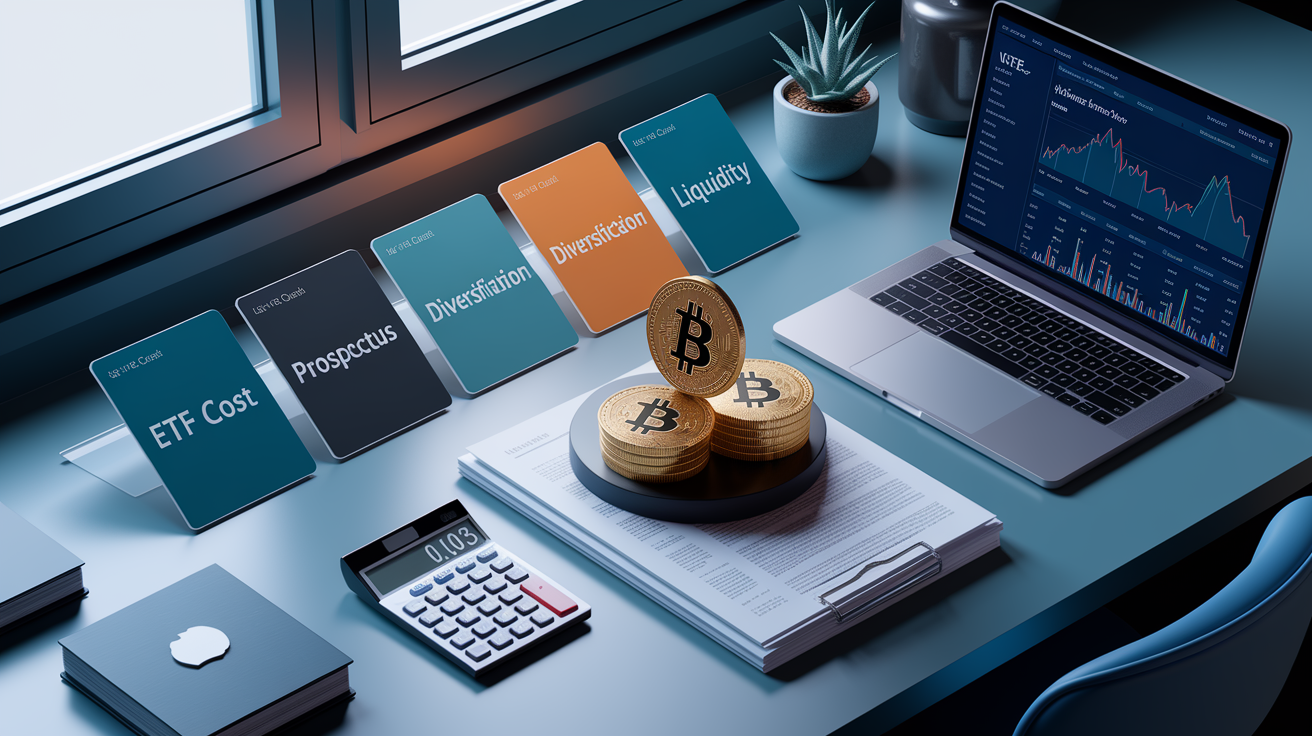
Core holdings need to hit three marks: low cost, broad diversification, high liquidity. These are the stable foundation, delivering market-like returns without much tracking error or fee drag. In traditional equity portfolios, that’s usually 2–5 holdings. A total U.S. stock market ETF, a total international equity ETF, maybe an aggregate bond index fund. In crypto, the core’s typically Bitcoin and Ethereum, or ETF wrappers for those two, making up 60–85% of the digital-asset piece. The point is to capture broad market exposure without getting fancy.
A well-built core keeps expense ratios in the low single-digit basis points for ETFs and skips narrowly focused strategies. For equities, you might grab a Vanguard Total Stock Market ETF (expense ratio near 0.03%) and pair it with a total international equity ETF at similar cost. For crypto, the core’s often direct holdings of Bitcoin and Ethereum in cold storage or via regulated spot ETFs. The difference between stock and crypto cores is volatility. Bitcoin and Ethereum are themselves higher-volatility assets than broad equity indices. But they still function as the “core” when you stack them against speculative altcoins or leveraged crypto products. The cost advantage of keeping the core in low-fee vehicles compounds over time and helps offset higher costs in satellites.
Crypto cores differ from stock cores in three ways. First, custody (self-custody versus exchange custody versus ETF wrappers). Second, liquidity depth (Bitcoin and Ethereum have deep, liquid markets; most altcoins don’t). Third, volatility expectations (annualized vol for Bitcoin often tops 60%, compared to 15–20% for broad U.S. equity indices). Despite higher volatility, Bitcoin and Ethereum stay “core” in the crypto context because they’ve got the deepest liquidity, longest track records, broadest adoption, and biggest market caps. A crypto-adapted core-satellite structure might put 80% into Bitcoin/Ethereum combined and 20% into a basket of five altcoins, each capped at 4%.
The five most common core asset categories in hybrid portfolios:
- Total-market equity ETFs (U.S. and international, broad equity exposure)
- Aggregate bond index funds (investment-grade bonds for fixed-income diversification and downside cushion)
- Large-cap index funds (S&P 500 or MSCI World for concentrated blue-chip exposure)
- Bitcoin (held directly or via spot ETF, the anchor digital asset)
- Ethereum (held directly or via spot ETF, smart-contract platform exposure)
Satellite Strategies, Asset Selection, and Evaluation Frameworks
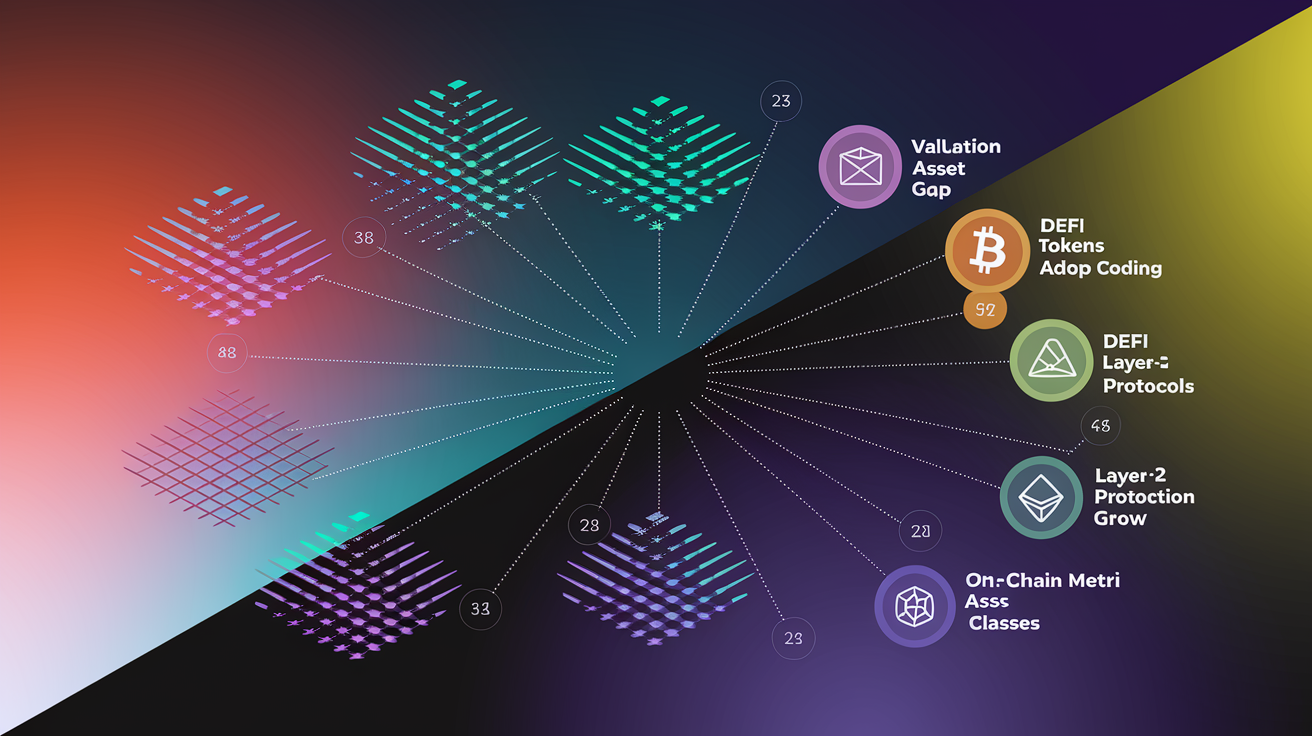
Satellites take up 10–40% of total portfolio value and do two things: chase alpha through higher-risk, higher-return bets, and add tactical diversification to stuff that doesn’t move with the core. Individual satellite positions usually land at 1–5% each to cap single-position risk. In equities, satellites might be sector ETFs (tech, healthcare), thematic ETFs (clean energy, AI), factor-based strategies (momentum, value, quality), emerging-markets funds, or individual high-growth stocks. In crypto, satellites are altcoins outside the top two by market cap, DeFi tokens, layer-two protocols, blockchain-infrastructure plays. The key is every satellite carries an explicit thesis. A reason to believe it’ll outperform the core over some defined window.
Stock satellite selection leans on fundamental analysis. Earnings quality, revenue growth, valuation multiples versus sector peers, competitive moat, management execution. Factor-based satellites use quant screens. Value satellites pick stocks with low price-to-earnings or price-to-book ratios. Momentum satellites target stocks with strong recent relative performance. Quality satellites favor high return-on-equity and low debt. A momentum satellite might be a factor ETF that rebalances quarterly to hold the top-decile performers from the Russell 1000. A high-conviction stock satellite could be a single mid-cap software company trading at a discount to its growth rate because of temporary margin pressure.
Crypto satellite evaluation runs on on-chain metrics and protocol fundamentals. Active addresses, transaction volume, total value locked (TVL) in DeFi protocols, developer activity measured by GitHub commits, token velocity, inflation schedules. You might add a layer-two scaling solution to satellites if on-chain transaction counts are climbing month-over-month and the protocol’s locked significant TVL from large decentralized apps. Or a DeFi token satellite gets justified by a protocol’s revenue generation (fees earned and distributed to token holders) and its spot as a top-three protocol by TVL in its category. Unlike equities, crypto projects often lack earnings. So metrics like network growth, usage, and protocol cash flows become the fundamental anchors.
Technical indicators can layer onto both stock and crypto satellite selection for short-term timing. Moving-average crossovers, RSI thresholds, breakout signals from consolidation ranges. These help refine entry and exit points. You might wait for a stock satellite to break above its 50-day moving average on rising volume before starting a 3% position. In crypto, satellites may get entered when an altcoin finds support at a key Fibonacci retracement level and RSI drops below 30, signaling oversold. These technical filters don’t replace fundamental or on-chain analysis. They just improve timing and cut the risk of buying into short-term momentum traps.
Five evaluation criteria that work across both asset classes:
- Thesis clarity – Write down the specific reason this position should outperform (valuation gap, adoption curve, factor exposure).
- Quantitative support – Use earnings metrics for stocks, on-chain activity or TVL for crypto, to back up the thesis.
- Risk-reward asymmetry – Estimate upside potential relative to downside and make sure the position offers at least a 2:1 or 3:1 ratio.
- Liquidity – Confirm the satellite can be entered and exited without excessive slippage (daily volume, bid-ask spreads).
- Time horizon and exit rules – Define how long you expect to hold and what conditions (price target, thesis invalidation) trigger a sale.
Sample Core-Satellite Portfolio Structures for Stocks and Crypto
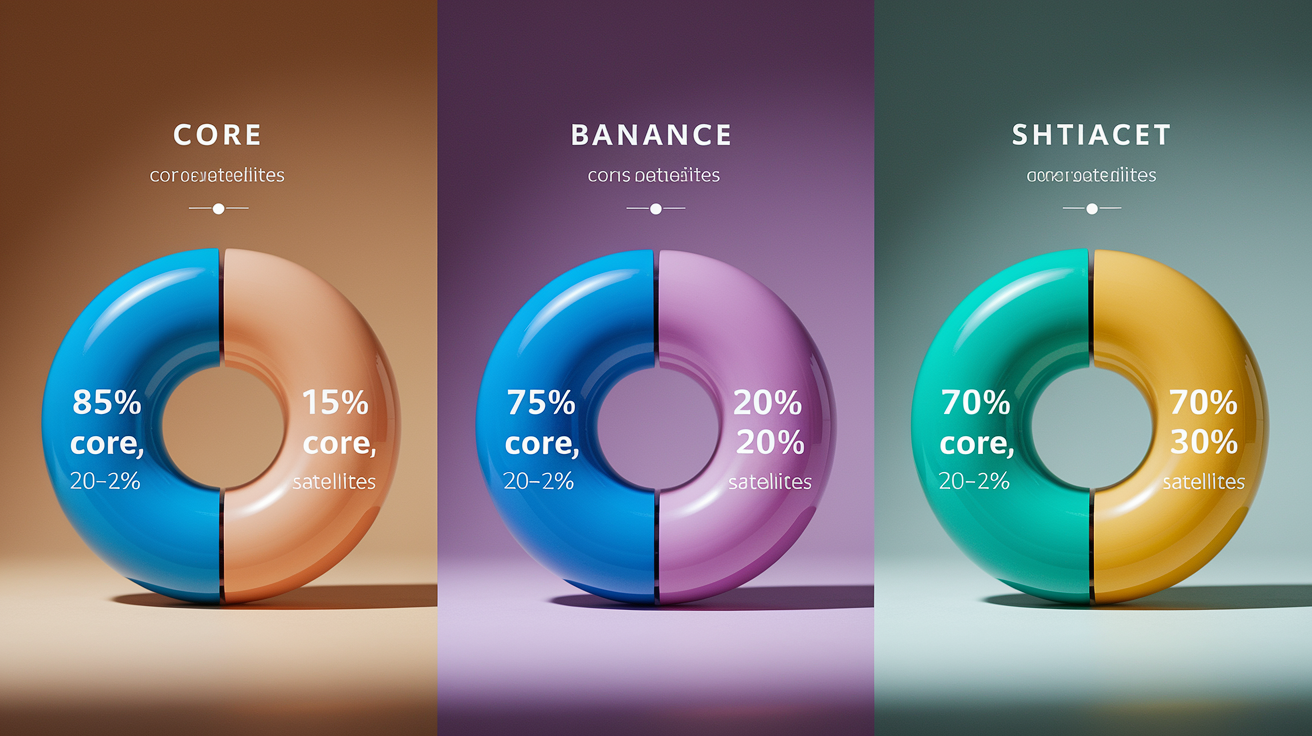
Allocation profiles usually fall into three risk buckets: conservative (85–90% core, 10–15% satellites), balanced (75–80% core, 20–25% satellites), and aggressive (70% core, 30% satellites). A conservative structure might put 50% in a broad U.S. equity index fund, 20% in an aggregate bond ETF, 10% in Bitcoin, 5% in Ethereum, and the remaining 15% split among dividend-focused blue chips and a gold ETF. This profile goes for stability and income. Satellites provide modest upside and inflation hedging. The core holdings dominate, so drawdowns stay contained during volatility spikes.
A balanced approach bumps satellite exposure to grab more alpha while keeping meaningful downside protection. Say 40% in a total stock market index, 15% in government and corporate bonds, 10% in international equities, 10% in Bitcoin, 5% in Ethereum, and the final 20% spread across sector ETFs (tech, healthcare), two high-growth individual stocks, and two mid-cap DeFi tokens capped at 3% each. This structure accepts higher volatility in exchange for broader diversification and satellite-driven returns. The core still represents 75% of assets. Even if every satellite underperforms, the portfolio retains most of its market exposure.
| Profile | Core Allocation | Satellite Allocation |
|---|---|---|
| Conservative | 85–90% (broad equity index, bonds, Bitcoin/Ethereum) | 10–15% (dividend stocks, REITs, gold ETC) |
| Balanced | 75–80% (total market index, international equity, bonds, Bitcoin/Ethereum) | 20–25% (sector ETFs, high-growth stocks, mid-cap altcoins) |
| Aggressive | 70% (total stock market, Bitcoin/Ethereum) | 30% (emerging markets, tech startups, DeFi tokens, small-cap stocks) |
An aggressive structure pushes satellites to 30%, accepting higher volatility and concentration risk. Sample allocation: 50% total stock market index, 10% international equities, 10% Bitcoin, 5% Ethereum, and the remaining 25% in higher-risk satellites. Maybe 10% in an emerging-markets ETF, 8% across three speculative tech stocks, 5% in a blockchain-infrastructure altcoin, and 2% in a high-yield bond ETF. This suits long time horizons and investors comfortable with drawdowns in exchange for the shot at outsized gains. The crypto sleeve itself might follow an 80/20 split: 80% Bitcoin and Ethereum, 20% altcoins and DeFi tokens, with individual altcoin positions capped at 4%.
Rebalancing Rules and Risk Budgeting in a Hybrid Portfolio

Rebalancing controls drift caused by uneven performance across core and satellite positions. A common rule is to rebalance at least annually. Lots of investors go semiannual or quarterly to deal with crypto volatility. Threshold-based rebalancing offers another route: trigger a rebalance when any asset’s weight drifts ±20% from its target or moves ±2–3 percentage points in absolute terms. If the target allocation to Bitcoin is 10% and it grows to 13% (a 3-point drift), you sell enough Bitcoin to restore the 10% target and move the proceeds to underweight assets, usually the core equity or bond positions.
Risk budgeting makes sure satellites stay within their intended 10–40% combined weight. A simple risk budget might allocate 70% of portfolio risk to the core and 30% to satellites, even if satellites represent only 20% of capital. Because satellites carry higher volatility. In practice, this means capping individual satellite position sizes at 1–5% and limiting total satellite exposure to 30% in aggressive portfolios or 15% in conservative ones. If a satellite outperforms and doubles in value, it may exceed its risk budget and need trimming. Selling a chunk of the winner locks in gains and stops the portfolio from becoming accidentally concentrated in a single high-risk asset.
Crypto volatility speeds up allocation drift compared with stocks. Bitcoin can move 10% in a day. Broad equity ETFs rarely do. This means crypto-heavy portfolios may need monthly or quarterly rebalancing checks, even if equities get reviewed annually. Some investors apply tighter thresholds to crypto satellites, rebalancing when an altcoin drifts ±15% from target rather than ±20%, to account for the speed and size of price swings. The goal is to keep the intended risk profile without overtrading, which racks up transaction costs and taxable events.
Rebalancing also serves a behavioral function. It enforces a discipline of trimming winners and adding to laggards, which feels weird but aligns with the strategy’s design. A satellite that’s appreciated 50% may now represent 7% of the portfolio instead of the original 3%, which jacks up concentration risk. Rebalancing restores the original 3% allocation and moves the excess capital back into the core or into other satellites that have underperformed. This mechanical process cuts the temptation to let winners run unchecked and helps you avoid the scenario where one or two satellites dominate the portfolio.
Cost, Tax, and Liquidity Considerations Across Stocks and Crypto

Total expense ratios for core ETFs typically run from 0.03% to 0.20%. Satellite funds and thematic ETFs can hit 0.50% to 0.75% or higher. Even if satellites carry higher fees, keeping the bulk of assets in low-cost core holdings keeps overall portfolio costs low. Say you’ve got 80% in a 0.03% total-market ETF and 20% in satellites averaging 0.60%. The blended expense ratio lands around 0.14%, still well below the cost of most actively managed funds. The key isn’t avoiding all high-cost satellites. It’s making sure the dominant core anchors total costs.
Crypto introduces extra cost layers. Exchange trading fees, blockchain network fees (gas), bid-ask spreads, slippage on lower-liquidity altcoins. Major exchanges charge 0.10–0.50% per trade for spot crypto. Decentralized exchanges can add variable gas fees that spike during network congestion. Slippage becomes real in satellites with thin order books. An altcoin with daily volume under $1 million might move 2–5% on a $10,000 market order. For this reason, satellite crypto positions should be sized with liquidity in mind, and limit orders should get used to control execution price.
Tax efficiency looks different between stocks and crypto. Equity ETFs benefit from in-kind creation and redemption, which defers capital gains. Frequent rebalancing in a taxable account can still trigger short-term gains, especially in satellites. Crypto’s treated as property in most jurisdictions, so every sale, including crypto-to-crypto trades, generates a taxable event. Tax-loss harvesting applies to both. Selling a losing position to realize a capital loss that offsets gains elsewhere. In crypto, you can harvest losses on altcoin satellites and immediately repurchase similar (but not identical) assets without violating wash-sale rules, since those rules currently apply only to securities in the U.S. But proposed regulation may close that gap.
- Place high-turnover satellites in tax-advantaged accounts (IRA, 401(k)) to defer or eliminate short-term capital gains taxes.
- Hold core equity ETFs in taxable accounts where in-kind redemptions and long holding periods minimize taxable distributions.
- Use specific-lot identification when selling satellites to control which tax lots are realized (sell high-cost lots first to minimize gains).
- In crypto, track cost basis carefully and consider tax-loss harvesting at year-end to offset gains from profitable satellite trades.
Risk Management and Volatility Controls in a Mixed Asset Core-Satellite Strategy

Satellites crank up portfolio volatility because they concentrate capital in higher-beta assets. Small-cap stocks, altcoins, emerging markets, sector ETFs. The core acts as the stabilizer, providing steady, diversified exposure that cushions drawdowns during market stress. A hybrid portfolio with 70% in broad equities and Bitcoin/Ethereum and 30% in satellites might see peak-to-trough drawdowns of 35–45% in a severe bear market, compared to 50–60% for a portfolio fully loaded into satellites. The math’s straightforward. If the core declines 20% and satellites drop 50%, the blended portfolio falls roughly 29% (0.70 × –20% + 0.30 × –50%).
Correlation management matters because the relationship between stocks and crypto shifts over time. During risk-on periods, Bitcoin often moves with tech stocks and growth equities. During risk-off selloffs, correlations can spike as investors liquidate both asset classes. But over multi-year windows, crypto’s shown periods of low or negative correlation with traditional equities, particularly when driven by crypto-specific catalysts like halving cycles or regulatory clarity. Monitoring rolling 90-day correlations helps you understand whether your satellites are giving you true diversification or just amplifying equity risk.
Position-sizing rules act as the main volatility control. Capping individual satellites at 1–5% each and total satellites at 10–40% combined stops any single bet from destabilizing the portfolio. If an altcoin satellite sized at 2% goes to zero, the portfolio loses only 2%. If the same satellite were 15% of assets, the loss would hurt. Maintaining core dominance ensures that even if every satellite underperforms or fails, the portfolio retains 60–90% of its value in stable, diversified assets. This structure lines up with the idea that satellites are speculative and should be treated that way. Sized for asymmetric upside but not big enough to sink the portfolio on the downside.
Implementation Steps and Monitoring Framework

Building a core-satellite portfolio starts with assessing risk tolerance, time horizon, and liquidity needs. An investor with a 20-year horizon and high risk tolerance might target 70% core / 30% satellites. Someone five years from retirement might choose 85% core / 15% satellites with a bigger bond allocation. Once the profile’s set, next step is selecting 2–5 core holdings. Usually a total U.S. equity ETF, an international equity ETF, an aggregate bond fund, and Bitcoin and Ethereum or their ETF equivalents. These assets should have low expense ratios, deep liquidity, broad diversification.
After you’ve got the core, define explicit satellite theses. Each satellite must answer three questions. Why should this asset outperform? What’s the time horizon? What conditions would invalidate the thesis and trigger an exit? Say your satellite thesis for a small-cap biotech stock is: “The company’s lead drug candidate enters Phase III trials in Q2. If successful, the stock could double within 18 months. Exit if Phase III fails or the stock hits a $50 price target.” Document these theses in an Investment Policy Statement (IPS) so decisions get based on pre-set rules, not emotion.
- Conduct a risk and goal assessment – Figure out your risk tolerance, time horizon, and whether you need liquidity for near-term expenses.
- Select 2–5 core holdings – Choose low-cost, diversified ETFs for equities and bonds, plus Bitcoin and Ethereum for crypto exposure.
- Define 3–8 satellite themes – Identify specific sectors, factors, stocks, or altcoins with clear investment theses and upside potential.
- Set target allocations and position sizes – Assign percentages to core (60–90%) and satellites (10–40%). Cap individual satellites at 1–5%.
- Document the Investment Policy Statement – Write down allocations, theses, rebalancing rules, and exit conditions for each satellite.
- Implement with phased buys or lump sums – Depending on market conditions and timing views, either deploy capital right away or phase in over several weeks.
- Monitor quarterly and rebalance annually or on thresholds – Track total return, volatility, drawdowns, and satellite hit rate. Rebalance when allocations drift ±2–3 points or at least once per year.
Monitoring means tracking performance against a blended benchmark and evaluating each satellite’s contribution. A simple benchmark might be 70% MSCI World Index + 20% Bloomberg Aggregate Bond Index + 10% Bitcoin, adjusted to match your core allocations. Measure total return, annualized volatility, maximum drawdown, and tracking difference (how much the portfolio deviates from the benchmark). Satellite hit rate, the percentage of satellites that meet or exceed their return target, provides a reality check on whether the strategy’s adding value. If fewer than 40% of satellites outperform over a rolling 12-month period, the satellite selection process may need work or the allocation to satellites should get cut.
Final Words
We laid out how a dominant core plus tested satellites works for a blended stocks-and-crypto portfolio: concrete allocation bands, core choices (broad ETFs, BTC/ETH), and satellite selection criteria.
We also covered rebalancing, taxes, risk limits, and monitoring steps so the plan stays disciplined and measurable.
This core satellite portfolio strategy for stocks and crypto explained gives templates and actions — pick low-cost cores, size satellites small, and rebalance on rules.
Start with a clear plan and the core will steady the ride.
FAQ
Q: What is the core-satellite portfolio strategy?
A: The core-satellite portfolio strategy is a structure where a low-cost, diversified core (typically 60–90%) provides stability, while smaller satellites (10–40%)—sector bets, individual stocks, or altcoins—seek extra returns.
Q: What is Warren Buffett’s 70/30 rule?
A: Warren Buffett’s 70/30 rule refers to a simple allocation idea: about 70% in a stable core and 30% in active satellites. It’s a rule‑of‑thumb, not a formal Buffett mandate.
Q: Is it build a diversified crypto portfolio for $1000?
A: Building a diversified crypto portfolio with $1,000 is possible by putting most into BTC and ETH as the core, then splitting the remainder into 2–4 small altcoin positions while watching fees and sizes.
Q: What is an example of a core-satellite portfolio?
A: An example: Balanced 75/25 — Core 75%: 60% global equity ETF, 15% bond ETF. Satellites 25%: 10% sector ETFs, 10% high‑growth stocks, 5% altcoins/DeFi.