
Ever wonder why altcoins often slide around token unlocks?
A 1% unlock versus circulating supply tends to shave about 0.3% the week before and 0.3% the week after, roughly 0.6% across two weeks.
That pattern tells the story: markets front-run supply, then react again when tokens hit exchanges.
The real drivers are unlock size, allocation concentration, and order-book liquidity.
If you trade altcoins, understanding unlock calendars is essential to spotting risk and timing moves.
How Token Unlocks Influence Altcoin Price Movements

A 1% token unlock relative to circulating supply creates an average 0.3% price decline in the week before the event and another 0.3% drop in the week after. That’s roughly 0.6% downside across a two-week window. The biggest moves concentrate two days before the unlock and three to four days after. The actual unlock day and the day right after show little measurable effect, which suggests markets front-run the supply release and then react again once early holders execute their sales.
Unlocks increase circulating supply. If demand stays flat while supply jumps, price falls. The severity depends on how much new supply hits the market (absolute tokens plus percent of existing float), how quickly recipients move tokens to exchanges, and whether staking or liquidity incentives absorb some of the newly unlocked tokens. Liquidity also matters. Thin order books amplify price swings when large blocks of tokens are sold. Traders who expect selling pressure often position short or exit positions early, creating downward momentum before the unlock even arrives.
Positioning around unlocks follows predictable patterns. Insiders and large holders may distribute tokens ahead of the event to avoid concentrated sell pressure on unlock day. Retail traders watch unlock calendars and either sell early (creating pre-event drops) or wait to buy dips after the event. Whales and market makers sometimes accumulate during panic selling if they believe demand will recover. The result is a volatility spike that peaks in the days surrounding the unlock, not always on the unlock date itself.
Common price reactions include:
Pre-unlock decline as traders price in future supply and early holders distribute
Muted move on unlock day because the market has already adjusted or is waiting for actual selling
Post-unlock volatility spike when unlocked tokens reach exchanges and order books absorb the flow
Partial recovery if demand remains strong or if a large share of unlocked tokens moves into staking rather than exchanges
Core Tokenomics Behind Unlock Schedules
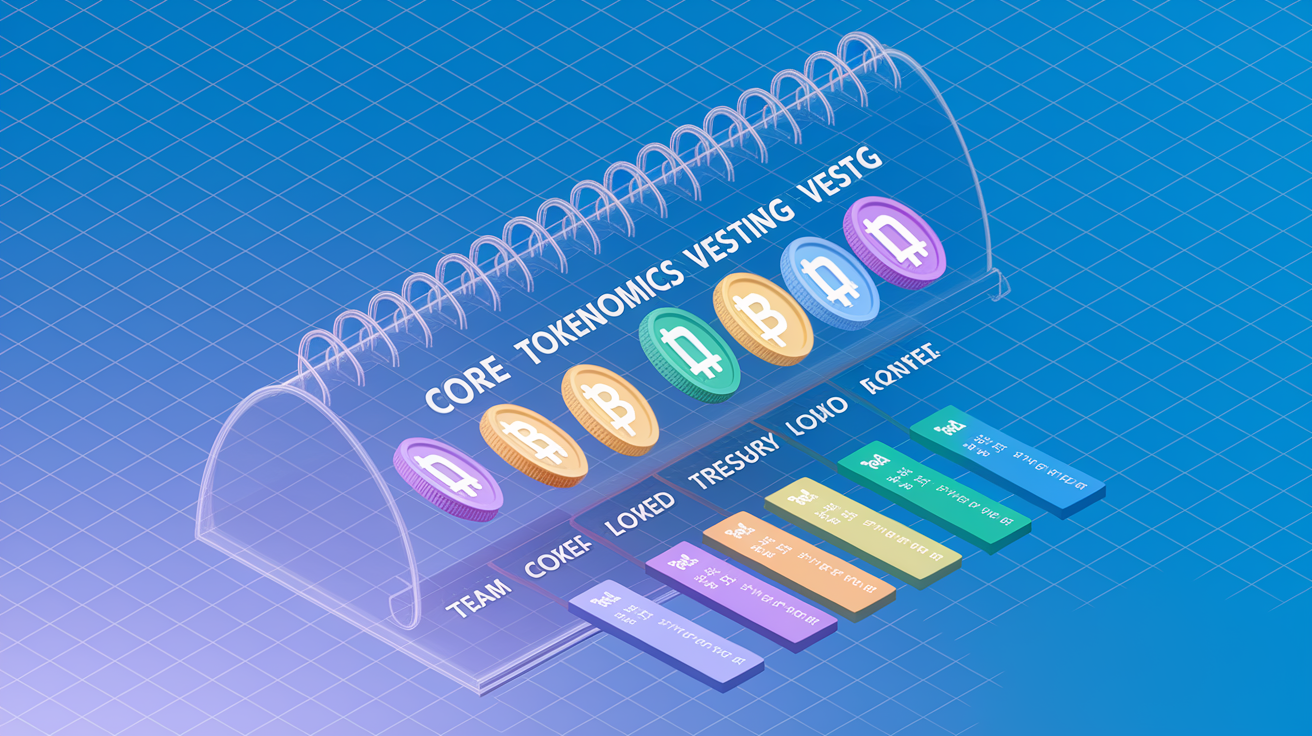
Token projects lock supply at launch to align incentives and prevent immediate dumps by teams, early investors, and advisors. Unlocks follow vesting schedules: monthly, quarterly, or milestone-based releases over one to four years. The goal is to tie long-term success to stakeholder retention. But every unlock increases circulating supply, and if that supply is large relative to the existing float, dilution risk rises. A project releasing 10% of its total supply in one month while only 20% was circulating before faces a 50% supply increase overnight.
Allocation percentages shape unlock impact. Team and investor allocations are typically the largest and most concentrated, making those unlocks the highest-dilution events. Treasury and ecosystem incentives are often released more gradually or tied to milestones, spreading the supply impact over time. Transparency matters. Projects that publish exact unlock dates and wallet addresses let traders prepare, reducing surprise-driven volatility. Opaque schedules create uncertainty and sharper reactions when the market discovers a large unlock after the fact.
| Category | Typical Allocation | Dilution Risk Level |
|---|---|---|
| Team | 15–25% | High (concentrated, often cliff + linear) |
| Investors | 20–35% | High (large blocks, early liquidity preference) |
| Treasury | 10–20% | Medium (used for grants, partnerships, often not immediately liquid) |
| Incentives | 15–30% | Low to Medium (staged over multiple years, tied to usage) |
Historical Patterns in Altcoin Price Reactions

LayerZero unlocked 25.71 million ZRO in December 2025, worth roughly $38.6 million. The majority moved into staking and cross-chain liquidity pools rather than exchange order books, and price remained relatively stable. Lista DAO released 33.44 million LISTA the same month, valued at about $5.5 million. Again, a large portion went to governance locks and liquidity mining, limiting immediate sell pressure. Both examples show that unlock size alone doesn’t predict outcome. Allocation behavior (staking, liquidity deposits, immediate exchange inflows) drives the actual price effect.
ONDO’s January 2025 unlock was a different story. The project released 1.94 billion tokens, more than 130% of its circulating supply at the time. Early holders and insiders received the bulk of the tokens, many of which moved to exchanges quickly. The result was elevated volatility and sustained downward pressure as the market absorbed a massive supply shock in a short window. Large, concentrated unlocks with immediate exchange inflows typically produce the sharpest negative reactions, especially when demand is weak or the broader market is in a risk-off phase.
Recurring historical patterns from unlock events:
Pre-unlock anticipation drops occur when traders expect selling and exit positions or open shorts. These moves are often as large as the post-unlock decline, reflecting the market’s forward-looking nature.
Post-unlock normalization or recovery happens when unlocked tokens are absorbed into staking, liquidity pools, or long-term holder wallets rather than being dumped on exchanges. Projects with strong utility and staking incentives see faster recoveries.
Cycle dependency is significant. Unlocks during bull markets are absorbed more easily because demand is high and buyers step in quickly. Unlocks during bear markets face weaker demand and produce larger, longer-lasting price declines.
Market Psychology and Trader Behavior During Unlocks

Fear of dilution drives early selling. Traders who hold a token approaching a large unlock often reduce exposure before the event, especially if the unlock is concentrated among insiders or early investors. This front-running creates downward pressure days or weeks ahead of the actual unlock date, explaining why the biggest price drops frequently occur before the supply hits the market.
Retail participants tend to react emotionally. Social media chatter and “unlock FUD” (fear, uncertainty, doubt) amplify selling pressure even when on-chain data shows tokens staying in wallets or moving into staking contracts. Institutional traders and market makers, by contrast, often treat unlocks as predictable liquidity events. They may hedge exposure with derivatives, accumulate during panic selling, or provide liquidity at wider spreads to capture volatility.
Whales and insiders have asymmetric information. Teams and early investors know their own selling intentions, and some distribute tokens gradually in the weeks before an unlock to avoid tanking the price on a single day. Other holders wait for post-unlock panic to buy back at lower prices. The result is a tug-of-war between early sellers, retail fear, and opportunistic buyers, producing the sharp but often short-lived volatility spikes that characterize unlock periods.
Case Studies of Major Altcoin Unlock Events
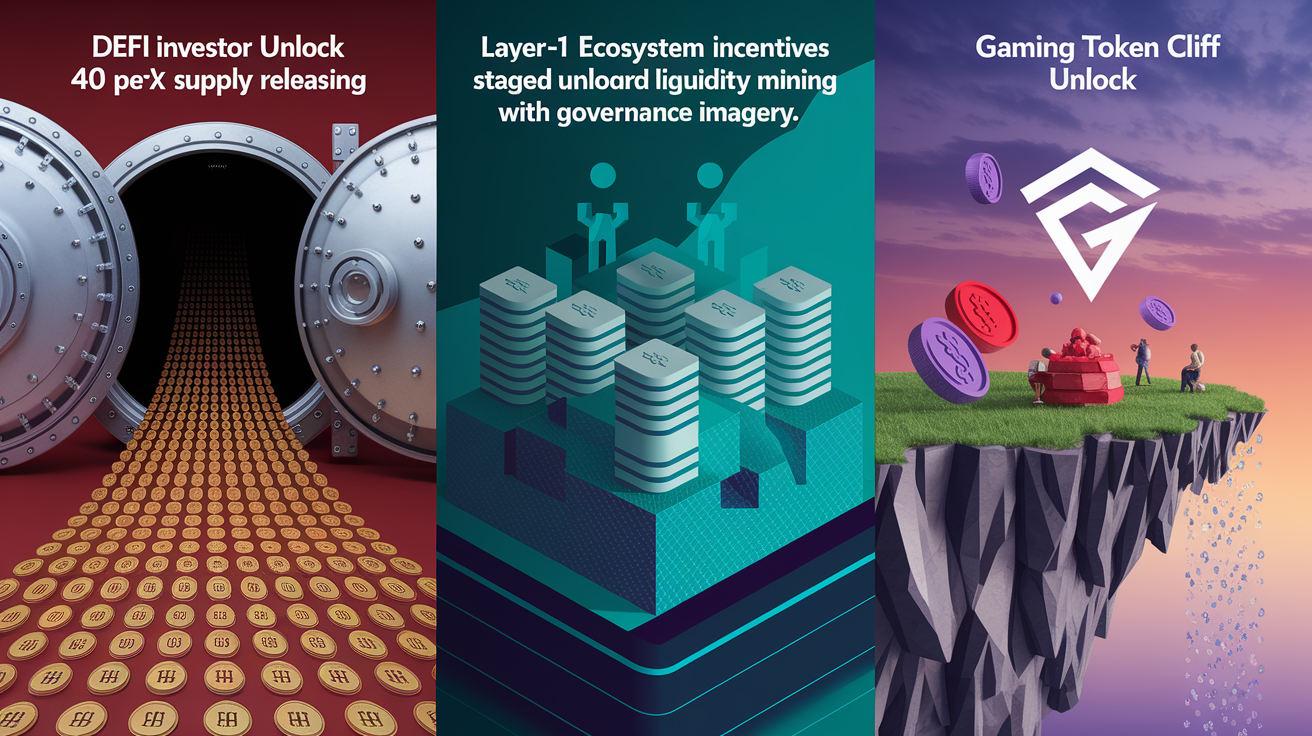
A DeFi protocol with a large investor unlock released 40% of its total supply in a single quarterly event. The unlock represented a 150% increase in circulating supply. Investors moved approximately 60% of the unlocked tokens to centralized exchanges within 48 hours. The token fell 35% over the following week as sell orders overwhelmed buy-side liquidity. Recovery took three months and required a combination of protocol revenue growth, new staking incentives, and a broader market rally.
A layer-1 blockchain project unlocked 10% of its supply allocated to ecosystem incentives and distributed the tokens to liquidity mining programs and developer grants. Less than 5% of the unlocked tokens reached exchanges immediately. The price dipped 8% in the two days before the unlock, then stabilized and recovered within a week as traders realized the supply was being absorbed into productive uses rather than sold. Staking rates increased by 12% in the month following the unlock.
A gaming token released 25% of its supply in a cliff unlock to the founding team. Team members began transferring tokens to exchanges on unlock day. The token dropped 22% within 72 hours. Social sentiment turned sharply negative as the community perceived the team as prioritizing exits over development. The project later introduced a buyback program and extended future unlock schedules, but the initial damage to trust and price momentum persisted for six months.
| Project Type | Unlock Size | Price Outcome |
|---|---|---|
| DeFi protocol (investor unlock) | 40% of total supply; 150% of circulating | −35% over one week; slow three-month recovery |
| Layer-1 blockchain (ecosystem incentives) | 10% of total supply; staged into liquidity & grants | −8% pre-event dip; recovery within one week |
| Gaming token (team cliff unlock) | 25% of total supply; immediate exchange inflows | −22% in 72 hours; prolonged negative sentiment |
How to Assess Future Unlock Risks
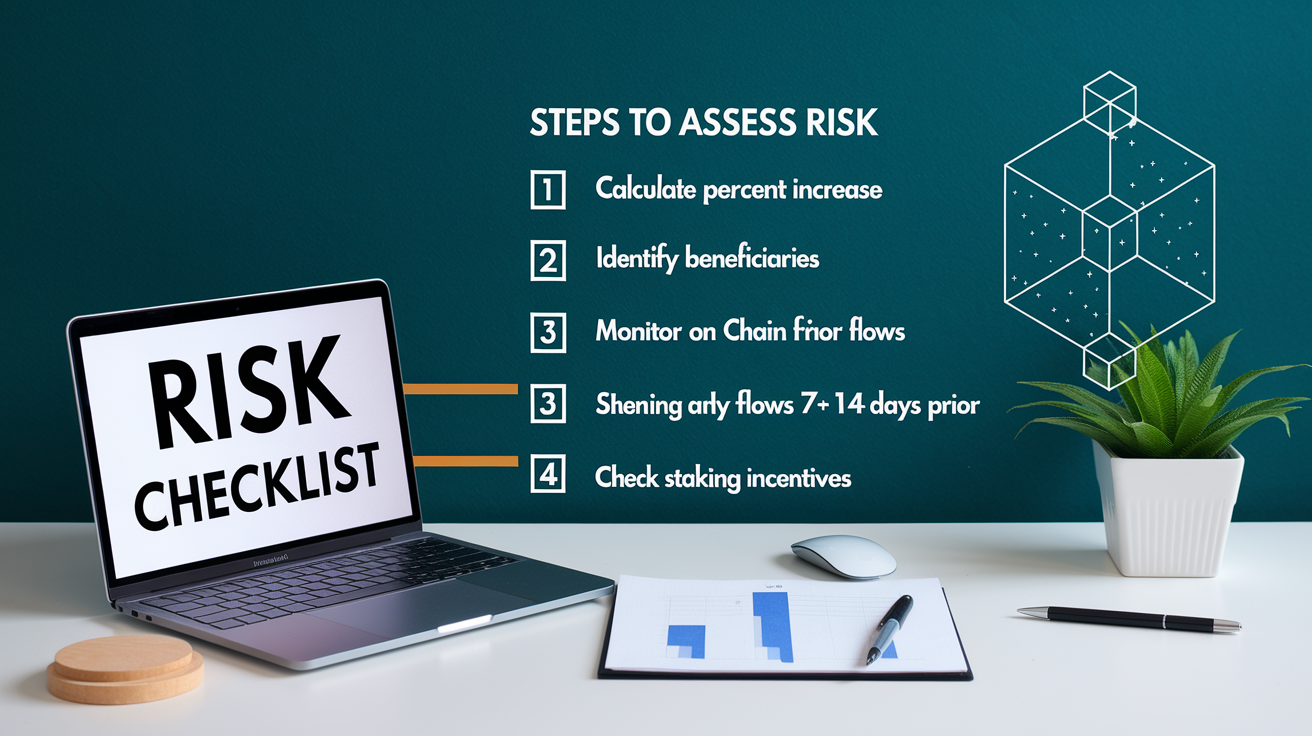
Unlock calendars are the first stop. Most projects publish schedules in documentation or on third-party tracking sites. Check the exact date, the number of tokens being released, and the current circulating supply to calculate the percentage increase. An unlock representing more than 10% of circulating supply is a red flag for potential volatility. Anything above 50% (like ONDO’s 130%) is a major supply shock that warrants defensive positioning or hedging.
Allocation transparency matters as much as the numbers. Identify who receives the unlocked tokens: team, investors, treasury, or community incentives. Team and investor unlocks carry higher sell risk because recipients are more likely to liquidate for diversification or profit-taking. Treasury and incentive allocations often stay locked in contracts or move into staking and liquidity pools, reducing immediate exchange supply. Check whether the project has announced staking bonuses, governance lock incentives, or liquidity mining campaigns timed to the unlock. These can absorb supply and dampen price impact.
Steps to analyze an upcoming unlock:
Calculate percent increase to circulating supply = (tokens unlocked / current circulating supply) × 100. Prioritize events above 10%.
Identify beneficiaries and allocation type (team/investor vs ecosystem/incentive). Team and investor unlocks have the highest sell probability.
Monitor on-chain flows starting 7 to 14 days before the unlock. Watch for large transfers to exchange deposit addresses using blockchain explorers or on-chain alert tools.
Check staking and liquidity incentives announced around the unlock date. Projects that launch new staking tiers or liquidity rewards near unlocks often successfully reduce sell pressure and stabilize price.
Final Words
When a scheduled unlock hits, supply spikes, traders reposition, and prices often wobble. Sometimes the move comes before the event; sometimes after. We covered supply shocks, tokenomics, historical patterns, trader psychology, case studies, and a checklist for sizing risk.
Focus on unlock size relative to circulating supply, who’s releasing tokens, and on-chain flows. That trio tells you whether sell pressure’s likely or the market will absorb it.
Keep the impact of token unlocks on altcoin prices in mind as a risk you can manage with simple checks. There’s usually an edge for those who plan ahead.
FAQ
Q: Does token unlock affect price?
A: A token unlock affects price by increasing circulating supply, often creating selling pressure; markets may pre-price the event, so the actual move depends on unlock size, timing, and demand.
Q: What happens when a crypto token unlocks?
A: When a crypto token unlocks, previously locked tokens enter circulation and holders can sell or transfer them, which raises supply and changes liquidity, prompting varied price reactions based on seller behavior.
Q: Are token unlocks good or bad? Are token unlocks bullish?
A: Token unlocks are neither inherently good nor bad; they can be bullish if demand soaks up new supply or bearish if large holders sell—context, liquidity, and market cycle determine the outcome.