

Most traders spot crypto catalyst events only after prices already move.
A catalyst event in crypto is something big enough to shove price out of its slow drift: a protocol upgrade, a regulatory ruling, an exchange listing, or a massive token unlock.
These events change supply, demand, or market structure fast, pushing volatility and forcing price to rediscover fair value.
Thesis: learn to spot catalysts ahead of time and you get better timing, clearer risk limits, and fewer surprise liquidations.
Core Definition of Crypto Catalyst Events and What They Mean for Market Movement

A catalyst event in crypto is something big enough to jolt price out of its normal drift. It’s not the usual stuff, the slow grind of volume or a minor technical pullback. It’s an event that moves price fast, shifts sentiment hard, and changes either the fundamentals or the market structure underneath an asset. Catalysts matter because they’re the moments when price stops creeping and starts jumping. For anyone trading or holding crypto, understanding catalysts means understanding when markets actually move and why, which helps with timing, risk, and knowing when to pay attention.
Catalysts work through three main channels: supply shocks, demand shocks, and liquidity or sentiment swings. Supply shocks happen when the amount of an asset being issued or available to trade changes suddenly. Think Bitcoin’s halving cutting block rewards in half, or a token unlock dumping millions of tokens into circulation. Demand shocks are about access expanding or contracting. A major exchange listing a token, or an ETF approval bringing in institutional money. Both create immediate pressure on price. Liquidity and sentiment often spike at the same time: trading volume jumps, spreads widen, volatility cranks up, and leverage gets liquidated in waves that push price further than the original catalyst would suggest on its own.
Real examples show the range. Bitcoin’s 2024 halving cut the block reward from 6.25 BTC to 3.125 BTC, slicing new supply in half and setting up the kind of long-term supply crunch that’s historically preceded major price cycles. The Ethereum Merge on September 15, 2022 changed consensus and issuance, acting as both a technical shift and a sentiment reset that pushed ETH to multi-month highs. Regulatory catalysts hit just as hard: China’s 2021 crackdown on mining and exchanges removed liquidity, kicked out participants, and tanked the market across the board. Exchange listings and delistings move price the moment they’re announced. Whale transfers signal accumulation or distribution before volatility hits. Every one of these events does the same thing: it changes supply, demand, or structure enough that price has to rediscover fair value in a hurry.
Categories of Crypto Catalyst Events and How They Influence Price Action
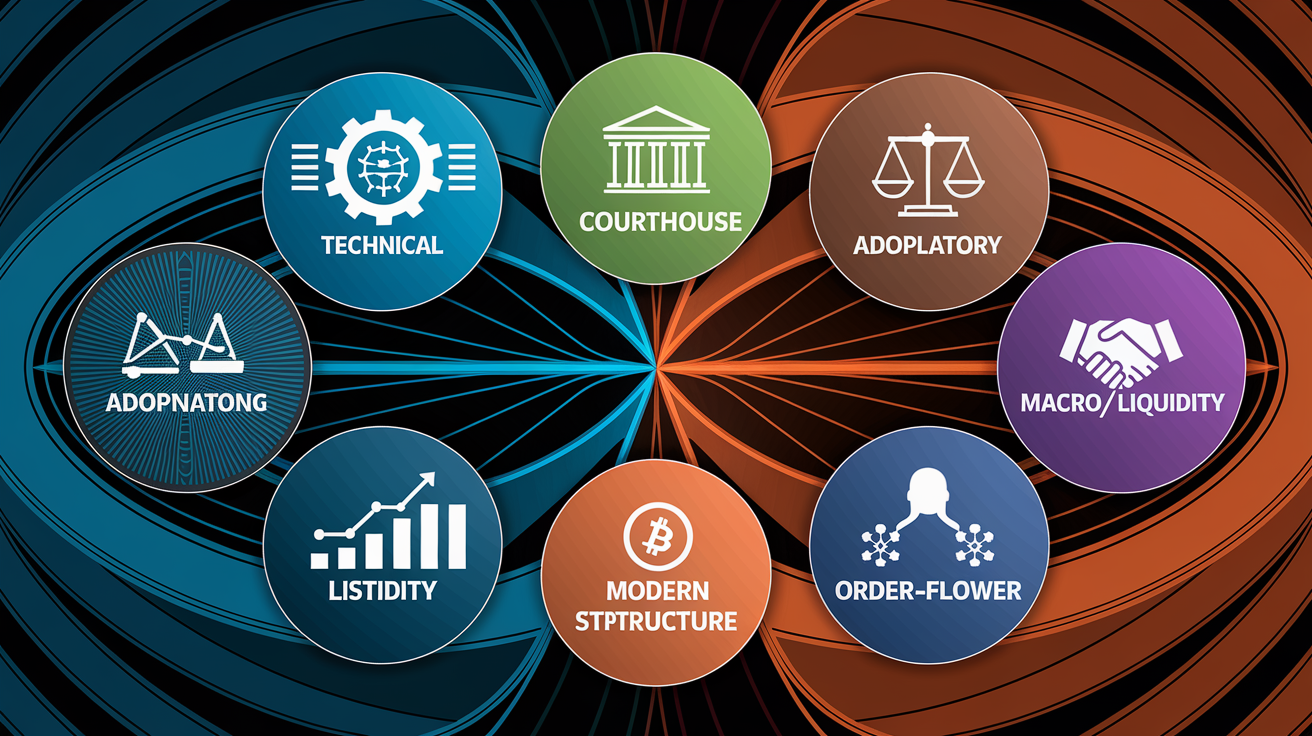
Grouping catalysts into types helps you figure out which signals actually matter and what kind of move to expect. Not every catalyst works the same. Some take months to play out, others shock price in hours. Clear categories let you build watchlists, prep positions, and avoid reacting to noise that looks like news.
Technical catalysts change how a protocol or token actually works. Protocol upgrades, halvings, forks, tokenomics changes. Bitcoin halvings happen every four years until around 2140. The 2024 halving cut block rewards from 6.25 BTC to 3.125 BTC, a 50 percent drop in new supply issuance. Ethereum’s Dencun upgrade started testing in early 2024 and includes EIP-4844, expected to drop layer-2 transaction fees by over 90 percent. These shifts change cost structures, usability, and long-term supply math, often triggering immediate volatility and trend changes that last. Hard forks split a chain or redenominate tokens, introducing uncertainty and sometimes creating new assets. Soft forks adjust rules without splitting, typically causing less chaos. Each type acts as a catalyst when it materially changes economics or gets the community fighting.
Regulatory and institutional catalysts reshape who can access the market and what’s legal. The launch of eleven U.S. spot Bitcoin ETFs in January 2024 brought about $800 million in inflows and close to $10 billion in trading volume in the first three days, pushing BTC briefly to $49,000 before a roughly 12 percent pullback. Those flows represent new demand channels from traditional finance. On the flip side, China’s 2021 regulatory crackdown banned mining and exchanges, pulling liquidity and participants out and causing a sustained decline. Legal rulings that classify a token as a security or commodity decide where it can trade and who can hold it, directly affecting liquidity and whether institutions show up. ETF filings, custody announcements from major banks, fund disclosures. All of these signal future demand or future restriction.
Social and market-structure catalysts come from positioning, sentiment, and network effects rather than protocol changes or policy. Whale transactions, big on-chain transfers worth tens of millions, often come before price moves as the market reads them as accumulation or distribution. Token unlock schedules and vesting cliffs release locked supply, introducing sell pressure that can overwhelm demand if the unlock is large compared to daily volume. Viral social media moments, influencer shoutouts, coordinated campaigns. These can shift sentiment fast, though the moves usually fade unless there’s something fundamental backing them up. Market-structure catalysts also include liquidation cascades, where leveraged positions unwind in waves and amplify price moves way beyond what the original catalyst would’ve done alone.
The major catalyst categories are:
- Technical
- Regulatory
- Adoption/Listing
- Macro/Liquidity
- Social
- Market-Structure
Technical Crypto Catalyst Events: Halvings, Upgrades, Forks, and Tokenomics Shifts

Bitcoin halvings are one of the most predictable and powerful technical catalysts in crypto. A halving occurs every 210,000 blocks, roughly every four years, and will keep happening until around 2140 when the final Bitcoin gets mined. The 2024 halving reduced the block reward from 6.25 BTC to 3.125 BTC, cutting the rate of new supply by 50 percent. This supply shock changes the stock-to-flow ratio, the measure of existing supply versus new issuance, and has historically preceded multi-month or multi-year upward price trends. After the 2020 halving, Bitcoin was trading below $10,000. It later peaked above $67,000 in 2021. Some argue halvings are “priced in,” but the combination of reduced issuance and media attention has consistently produced volatility and trend shifts within 12 to 18 months of the event.
Protocol upgrades and forks change the technical foundation of a blockchain and can shift economics, usability, and competitive positioning. The Ethereum Merge on September 15, 2022 moved the network from proof-of-work to proof-of-stake, cutting issuance by about 90 percent and slashing energy consumption. Ethereum briefly rose above $2,700, its highest level since May 2022, on anticipation and execution of the Merge. The Dencun upgrade entered testing in early 2024 and includes EIP-4844 (proto-danksharding), expected to cut layer-2 fees by more than 90 percent by introducing blob transactions. Hard forks split a blockchain into two incompatible versions, creating uncertainty and sometimes producing new tokens, like Bitcoin Cash from Bitcoin. Soft forks adjust rules without splitting and typically cause less volatility. Each fork or upgrade acts as a catalyst when it materially changes supply, fees, or validator economics.
Tokenomics shifts like burns, unlocks, and vesting schedules directly change circulating supply and selling pressure. Token burns permanently remove supply from circulation, increasing scarcity and often boosting price if demand holds steady. Token unlocks and vesting cliffs release previously locked tokens to early investors, team members, or foundations, introducing sell pressure that can overwhelm buy-side liquidity. Large unlocks relative to daily volume can cause sharp declines, especially in lower-cap altcoins. Investors monitor unlock calendars and vesting schedules as predictable supply catalysts, adjusting positions ahead of known events to dodge liquidity gaps or to capture post-event rebounds.
| Event Type | Example | Market Effect |
|---|---|---|
| Halving | Bitcoin 2024 halving (6.25 → 3.125 BTC) | 50% supply reduction; historically precedes 12–18 month uptrends |
| Protocol Upgrade | Ethereum Merge (Sept 15, 2022) | 90% issuance drop; ETH briefly above $2,700 |
| Fork | Bitcoin Cash hard fork from Bitcoin | Chain split; new token creation; short-term uncertainty |
| Tokenomics Change | Large unlock or token burn event | Sell pressure (unlock) or scarcity boost (burn); volatility spike |
Regulatory and Institutional Crypto Catalyst Events That Move Markets
The launch of eleven U.S. spot Bitcoin ETFs in January 2024 was one of the most powerful institutional catalysts in crypto history. The ETFs, offered by firms including BlackRock, Grayscale, and Franklin Templeton, pulled in approximately $800 million in net inflows and generated nearly $10 billion in trading volume during the first three days. Bitcoin spiked intraday to $49,000 on the news before dropping roughly 12 percent in the following days as early buyers took profit and the market digested the scale of the event. The ETF approval opened a direct channel for traditional finance investors (pension funds, wealth managers, retail brokerage accounts) to get Bitcoin exposure without dealing with custody complexity, representing a structural demand shift that’s still influencing flows and sentiment months later.
Regulatory decisions (approvals, bans, classifications, enforcement actions) create or destroy market access and determine legal risk. China’s 2021 regulatory crackdown banned cryptocurrency mining and exchange operations, forcing miners to relocate and exchanges to delist Chinese users. The sudden removal of liquidity and participants caused a sustained market decline and a geographic redistribution of hashrate. Legal classifications matter too: when a token is deemed a security, it faces listing restrictions, custody limitations, and compliance costs that reduce liquidity and keep institutions out. When a token is classified as a commodity or when a jurisdiction legalizes crypto activity, exchanges list the asset more widely, liquidity improves, and institutional capital enters. Court rulings, agency guidance, and legislative changes all function as regulatory catalysts, often triggering immediate price moves and longer-term structural shifts in how and where a token can trade.
Institutional adoption signals (custodial support announcements, corporate treasury allocations, fund filings) act as forward-looking demand catalysts. When a major custodian like a global bank announces support for a token, it signals that institutional infrastructure is being built, which comes before inflows from funds that require third-party custody. Corporate treasury announcements, such as a public company disclosing Bitcoin holdings valued at over $420 million, validate the asset as a treasury reserve and encourage other firms to follow. Fund filings for spot ETFs or closed-end funds indicate that asset managers expect demand and are building products to capture it. Each of these signals functions as a catalyst because it changes the expected trajectory of institutional participation, often moving price before actual capital flows show up.
The most impactful regulatory catalysts are:
- Spot ETF approvals or rejections
- National bans or legalizations of crypto activity
- Token security vs. commodity classifications
- Enforcement actions against major exchanges or projects
- Legislative frameworks that clarify tax, custody, or trading rules
Adoption, Listings, and Partnerships as Crypto Catalyst Events

Exchange listings create immediate demand shocks by expanding the pool of potential buyers and increasing liquidity. When a major centralized exchange lists a token, it brings the asset in front of millions of users who can now trade it with fiat pairs, margin, and derivatives. Listings often trigger volume spikes of several hundred percent and rapid price increases as new buyers pile in and existing holders see validation. Delistings remove liquidity and signal regulatory risk or project failure, causing sharp declines and forcing holders to move assets to smaller, less liquid venues. The catalyst effect of a listing depends on the exchange’s size and geographic reach. A Binance or Coinbase listing typically moves price more than a smaller regional exchange, and the token’s existing liquidity and market cap also matter.
Partnerships and adoption announcements shift long-term demand expectations by showing real-world utility and institutional validation. When a major payment processor, e-commerce platform, or enterprise software provider integrates a token or blockchain, it signals that the asset has utility beyond speculation. Corporate partnerships can also unlock new user bases. A partnership between a blockchain and a global logistics company introduces the token to supply chain participants who may need it for settlement or tracking. Merchant adoption and point-of-sale integrations similarly expand use cases, though the price impact depends on transaction volume and whether the partnership is exclusive or just exploratory. The most powerful partnership catalysts combine brand recognition, large user bases, and material transaction flows.
Mainnet launches and roadmap milestones act as technical and sentiment catalysts by moving a project from promise to operational reality. A mainnet launch marks the shift from testnet to production, where real transactions happen and the token gains utility. Investors often buy ahead of mainnet, then sell on the news, creating a classic “buy the rumor, sell the news” pattern. Other roadmap milestones (governance activation, staking launch, cross-chain bridge deployment) work similarly, with price often rising ahead of the event and pulling back afterward. The key is distinguishing between milestones that change fundamentals (like enabling staking, which locks supply) and those that are mostly symbolic.
| Catalyst Type | Example | Expected Market Impact |
|---|---|---|
| Major Exchange Listing | Binance or Coinbase lists a mid-cap altcoin | Volume surge, 20–100%+ price spike, increased liquidity |
| Delisting | Exchange removes token due to regulatory concern | Sharp decline, liquidity exit, holder panic |
| Corporate Partnership | Global payments company integrates blockchain | Validation signal, gradual demand increase, media attention |
| Mainnet Launch | Testnet → mainnet transition with live transactions | Pre-launch rally, post-launch profit-taking, long-term fundamentals improve |
| Merchant Adoption | Retailer accepts token for payments | Use-case validation, modest price impact unless at scale |
Market-Structure Crypto Catalysts: Volume Surges, Whale Moves, Liquidations, and Unlock Cycles

Whale transactions (large on-chain transfers typically valued in the tens or hundreds of millions of dollars) often come before sharp price moves because they signal accumulation or distribution by holders with serious capital. When a whale moves tokens from a personal wallet to an exchange, the market reads it as preparation to sell, which can trigger preemptive selling by smaller holders. Large transfers from exchanges to cold storage suggest accumulation and long-term holding, often coming before upward price pressure. Volume surges that aren’t explained by news or technical events can also signal insider activity or coordinated moves, working as a leading indicator of volatility. Ethereum recorded approximately 2 million transactions in 24 hours on January 14, 2024, a new all-time high that signaled intense network activity and often correlates with price movement as demand for block space increases.
Liquidation cascades amplify the initial move of a catalyst by forcing leveraged positions to close in waves. When price moves against a leveraged position beyond a certain threshold, the exchange automatically sells (for longs) or buys (for shorts) to cover the margin, adding to the price pressure. In low-liquidity conditions, these forced trades can push price further in the same direction, triggering the next wave of liquidations in a feedback loop. A catalyst that moves Bitcoin 5 percent in a few hours might trigger enough liquidations to push the move to 10 percent or more, especially during periods of high open interest and leverage. This means even moderate catalysts can produce outsized moves when market structure is fragile. Traders should watch open interest and funding rates as proxies for liquidation risk.
Token unlocks and vesting cliffs introduce known supply shocks that can overwhelm demand if the released tokens are large relative to daily trading volume. Early investors, team members, and foundations often have tokens locked for 6 to 24 months after a project’s launch, with vesting schedules releasing portions monthly or quarterly. A large cliff unlock, where millions of tokens become liquid on a single date, creates immediate sell pressure as recipients liquidate holdings. Lower-cap altcoins are especially vulnerable because their daily volume may only be a fraction of the unlocked amount, meaning even modest selling can move price sharply downward. Investors track unlock calendars and adjust positions ahead of known events, either exiting to avoid the supply shock or waiting to buy after the sell pressure subsides.
Five critical on-chain signals to monitor for market-structure catalysts:
- Large transfers between wallets and exchanges (whale activity)
- Exchange inflow and outflow volume (accumulation vs. distribution)
- Daily transaction count and network throughput (demand for block space)
- Open interest and funding rates (leverage and liquidation risk)
- Scheduled token unlocks and vesting cliffs (known supply shocks)
Macro and Social Sentiment as Crypto Catalyst Events

Macroeconomic catalysts (interest rate decisions, liquidity injections, fiat instability, geopolitical shocks) shape crypto demand by changing the opportunity cost of holding risk assets and the appeal of decentralized alternatives to traditional finance. When central banks raise interest rates, the yield on cash and bonds increases, making non-yielding assets like Bitcoin less attractive and often triggering capital rotation out of crypto. Rate cuts, quantitative easing, or fiat currency devaluations increase the appeal of scarce, fixed-supply assets, driving demand. The launch of U.S. spot Bitcoin ETFs in January 2024 happened during a period of anticipated rate stabilization, and the resulting capital inflows were amplified by institutional investors seeking alternatives to traditional portfolios. Macro catalysts operate on longer timeframes than technical or regulatory catalysts, but their effects are often larger and more sustained because they reshape the entire risk environment across asset classes.
Social sentiment catalysts (viral news, influencer endorsements, coordinated campaigns, meme-driven narratives) create short-lived but sharp price moves by shifting attention and retail participation. A tweet from a high-profile figure can move a token by double digits within hours, especially if the endorsement is unexpected or tied to a large following. Viral news stories, whether positive (a celebrity launching an NFT project) or negative (a hack or scandal), concentrate attention and volume in a compressed timeframe. These sentiment catalysts are often mean-reverting. Price spikes and then corrects as attention fades. But they can create trading opportunities for those who recognize the pattern. Social sentiment also interacts with other catalysts: a mainnet launch combined with influencer promotion produces a stronger move than either event alone.
Four major sentiment drivers that act as catalysts:
- Influencer endorsements or high-profile mentions
- Viral social media campaigns or memes
- Major media coverage or mainstream adoption narratives
- Coordinated community-driven events or governance votes
How to Identify Crypto Catalyst Events Before They Happen

Knowing the difference between predictable catalysts and surprise catalysts determines how much you can prepare and how much risk you’re taking. Predictable catalysts (Bitcoin halvings, scheduled protocol upgrades, token unlocks, ETF decision deadlines) are announced weeks or months in advance, giving you time to adjust positions, hedge, and watch how the market’s pricing it. Surprise catalysts (regulatory announcements, exchange hacks, sudden partnerships, whale moves) offer no advance notice and create immediate volatility. The key difference is whether the market can price in the event beforehand: predictable catalysts often see price move ahead of the date as buyers position early, then pull back on the news as early buyers take profit. Surprise catalysts tend to produce one-directional moves with follow-through, because the market has no time to adjust positioning.
Reliable data sources for spotting catalysts include project roadmaps and official channels (GitHub repositories, governance forums, developer calls), regulatory calendars and ETF filing trackers (SEC filings, court dockets, agency announcements), on-chain analytics dashboards (exchange flow monitors, whale alerts, unlock schedules), and market data screens (volume spikes, open interest changes, volatility indices). GitHub activity and Ethereum Improvement Proposal (EIP) progress provide leading signals for technical upgrades. Sustained commits and testnet deployments come weeks before mainnet launches. ETF filings and fund disclosures appear in public records before approval decisions, letting you track institutional interest. On-chain dashboards show real-time whale transactions, exchange inflows and outflows, and staking or treasury movements, which often come before price moves by hours or days. Volume and open interest screens flag unusual activity that may signal insider positioning or coordinated trades.
Verifying news and telling confirmed events from rumors prevents false-catalyst trades that reverse quickly. Unconfirmed rumors (leaked partnerships, regulatory speculation, fake announcements) can move price temporarily, but the reversal is often swift and punishing for those who enter late. Always confirm catalyst news through multiple independent sources: official project announcements, regulatory filings, reputable media with named sources, and on-chain evidence. If a rumor can’t be verified and price is moving sharply, the safest position is often to wait for confirmation or trade with tight stops to limit downside if the rumor proves false.
Six steps for identifying catalysts early:
- Monitor project roadmaps, GitHub repositories, and governance proposals for technical catalysts.
- Track regulatory calendars, ETF filings, and court dockets for legal and institutional catalysts.
- Use on-chain dashboards to watch whale activity, exchange flows, and unlock schedules.
- Screen for volume, open interest, and volatility spikes that signal positioning ahead of news.
- Follow official project channels and reputable media for partnership and adoption announcements.
- Verify all news through multiple independent sources before trading on rumors.
Trading Strategies and Risk Management for Crypto Catalyst Events

Markets often price in predictable catalysts ahead of the event date, the “buying the rumor, selling the news” pattern. Investors anticipate the catalyst, position early, and then take profit when the event happens, causing price to peak before or on the announcement and pull back afterward. Bitcoin’s 2024 halving was widely discussed for months in advance, and BTC rallied from below $40,000 in early 2024 to $49,000 shortly after the ETF launch in January, then declined roughly 12 percent in the days following. This pattern is common with scheduled upgrades, halvings, and known regulatory deadlines. The timing risk is that price may peak days or weeks before the catalyst, leaving late entrants to buy at the top. Successful catalyst trading requires entering positions early, scaling out as the event approaches, and avoiding the temptation to chase after the news has broken.
Risk management methods for catalyst trading include position sizing, stop-loss orders, and hedging. Catalysts increase volatility, widen bid-ask spreads, and can create liquidity gaps where price jumps several percent in seconds. Position sizing should reflect this elevated risk. Reducing exposure by 30 to 50 percent relative to normal trades limits downside if the catalyst produces an unexpected move. Stop-loss orders protect against adverse moves but should be placed wider than usual to avoid being stopped out by normal catalyst volatility. Hedging with options or futures lets you capture upside while capping downside: buying a put option ahead of a catalyst limits loss if price drops sharply, while the cost of the option is the maximum risk. Reducing leverage ahead of known catalysts prevents liquidations, as catalyst-driven moves can exceed typical intraday ranges and trigger forced closures.
Technical indicators like the Simple Moving Average (SMA) and Exponential Moving Average (EMA) help measure trend shifts caused by catalysts and identify entry or exit points. The 50-day SMA shows the average price over the past 50 days, smoothing out short-term noise and indicating the medium-term trend. The 50-day EMA weights recent days more heavily, responding faster to price changes and signaling trend shifts sooner. When price crosses above the 50-day EMA after a catalyst, it often signals the start of a new uptrend. Crossing below signals potential reversal. Combining both indicators (using the EMA for short-term signals and the SMA for trend confirmation) reduces false signals and improves timing. You should also monitor volume and open interest alongside moving averages, as catalysts that move price without volume follow-through often reverse quickly.
Four rules for safe catalyst trading:
- Enter positions early when the catalyst is known; avoid chasing after the news breaks.
- Size positions smaller than normal to account for elevated volatility and execution risk.
- Use stop-losses placed wider than typical ranges; consider options hedges for downside protection.
- Combine technical indicators (SMA, EMA, volume) to confirm trend shifts and avoid false signals.
Final Words
We started with a tight definition: a catalyst is a significant event that can trigger abrupt price moves. The piece then unpacked mechanics—supply and demand shocks, liquidity and sentiment swings—and gave concrete examples like the Bitcoin halving, the Ethereum Merge, and major regulatory moves.
We grouped catalysts (technical, regulatory, adoption/listings, market-structure, macro/sentiment), showed how to spot them with on‑chain tools and filings, and laid out trading and risk rules.
Ask yourself: what is a catalyst event in crypto right now? That question helps separate noise from real setups. Stay curious and prepared — that’s the edge.
FAQ
Q: What does catalyst mean in crypto and what does catalyst event mean?
A: A catalyst in crypto, or a catalyst event, is a significant development that triggers a sudden price move by changing supply, demand, liquidity, or sentiment, often creating sharp volatility and rapid re-pricing.
Q: Does a catalyst improve yield?
A: A catalyst can improve yield by boosting demand, fees, or staking activity, but it can also reduce yield; the net effect depends on event type, timing, and market positioning.
Q: What are 5 examples of catalysts?
A: Five examples of catalysts are Bitcoin halving, protocol upgrades (like the Ethereum Merge or EIP-4844), regulatory rulings or ETF approvals, exchange listings/delistings, and large whale transfers or token unlocks.