

Can one Fed interest-rate decision wipe billions off crypto and reprice stocks in hours?
It can, because Fed moves change liquidity (how much money is available), borrowing costs, and the dollar, the three channels that steer risk assets, with equities responding through discount-rate math (how future earnings are valued) and tighter credit, while crypto reacts more to leverage, stablecoin flows, and fragile liquidity, so swings are often bigger.
This piece lays out the transmission paths, historical examples, and what to watch after a Fed announcement.
Market Reaction to Federal Reserve Rate Decisions

Federal Reserve rate decisions act as a release valve for global capital flows. When the Fed adjusts the federal funds rate, it changes the cost of overnight borrowing between banks and immediately influences credit conditions, margin rates, and the discount rates investors use to value future returns. Lower rates flood the system with cheaper capital, pushing investors toward risk assets like stocks and crypto. Higher rates drain liquidity, raise the appeal of cash and bonds, and make speculative bets more expensive to hold.
Equities respond through earnings expectations and valuation math. A rate cut lowers discount rates, which raises the present value of future corporate earnings and makes stocks more attractive than bonds. The S&P 500 gained 24 percent in 2023 and 23 percent in 2024, partly because the Fed paused hikes and later signaled cuts. That supported growth stock valuations. Crypto markets move differently. Bitcoin, Ethereum, and altcoins don’t produce cash flows or dividends, so they trade on liquidity and risk appetite. When rates drop and the dollar weakens, stablecoin inflows pick up, leverage returns to exchanges, and speculative demand lifts prices. When rates rise, margin calls force liquidations and risk-off sentiment spreads fast.
Fed policy also moves the dollar, which creates a secondary effect. A hawkish Fed strengthens the dollar, pressuring commodities priced in dollars and creating headwinds for global risk assets. A dovish Fed weakens the dollar and often lifts both gold and crypto, which trade as alternatives to fiat. Understanding these channels helps explain why equities and crypto can both rally on the same dovish signal, even though they operate on fundamentally different valuation models.
The main transmission channels from Fed decisions to market prices include:
- Liquidity provision. Lower rates increase money available for lending, investment, and speculation.
- Discount rate shifts. Higher rates reduce the present value of future earnings and cash flows.
- Dollar strength. Rate differentials versus other central banks drive currency moves that affect global asset prices.
- Risk appetite. Tighter policy reduces investor tolerance for volatility and speculative positions.
Monetary Policy Transmission Mechanisms
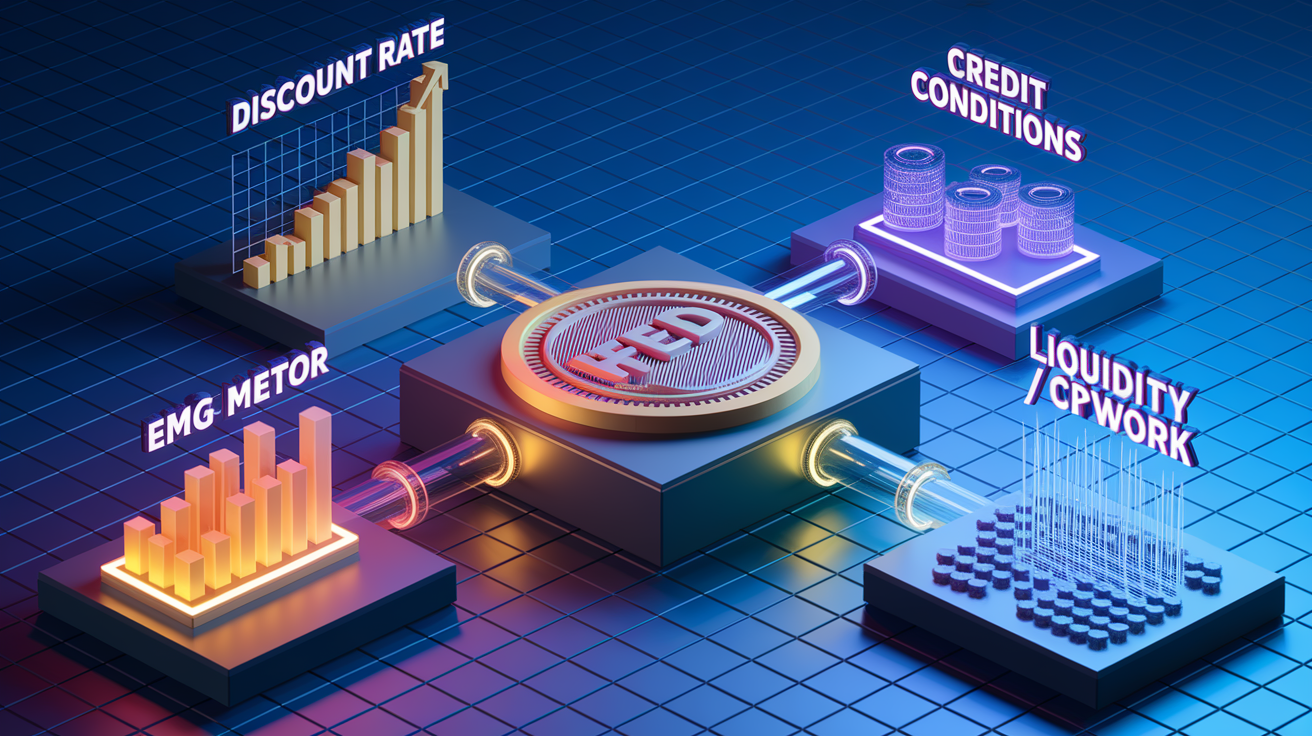
The Fed influences markets through three core channels that operate at different speeds and hit different asset classes with varying force. The discount rate channel is the most direct for equities. When the Fed raises rates, the discount rate investors use to calculate present value of future earnings also rises, compressing equity valuations. Growth stocks with earnings years away feel this pressure hardest because their value depends on distant cash flows being discounted back to today. Lower rates reverse this math and lift valuations, especially in sectors like technology where profit expectations stretch far into the future.
The credit conditions channel works through borrowing costs across the economy. Higher short-term rates increase the cost of corporate debt, margin loans, and consumer credit. Companies face higher interest expense on floating rate debt, which pressures profit margins. Investors borrowing to buy stocks or crypto pay more in margin interest, reducing leverage and shrinking effective demand. Tighter credit also slows economic activity, which can reduce earnings growth and dampen investor optimism. Lower rates ease all these frictions. They encourage borrowing, expansion, and risk taking.
Crypto markets respond less to discount rate math and more to liquidity scarcity and leverage dynamics. When rates rise, stablecoin yields on centralized platforms become more attractive than holding volatile tokens, pulling capital out of speculative positions. Margin calls force leveraged traders to close positions, creating cascading liquidations that amplify downside moves. Funding rates on perpetual futures contracts turn negative as shorts dominate, signaling reduced risk appetite. When rates fall, this process reverses. Cheaper leverage returns, stablecoin inflows accelerate, and traders rebuild positions. Crypto peaked in November 2021 as the Fed signaled tightening, then fell through 2022 as 11 rate hikes drained liquidity. Prices rebounded in 2023 and 2024 as rate pressure eased and forward guidance turned dovish.
Historical Market Reactions to Fed Decisions
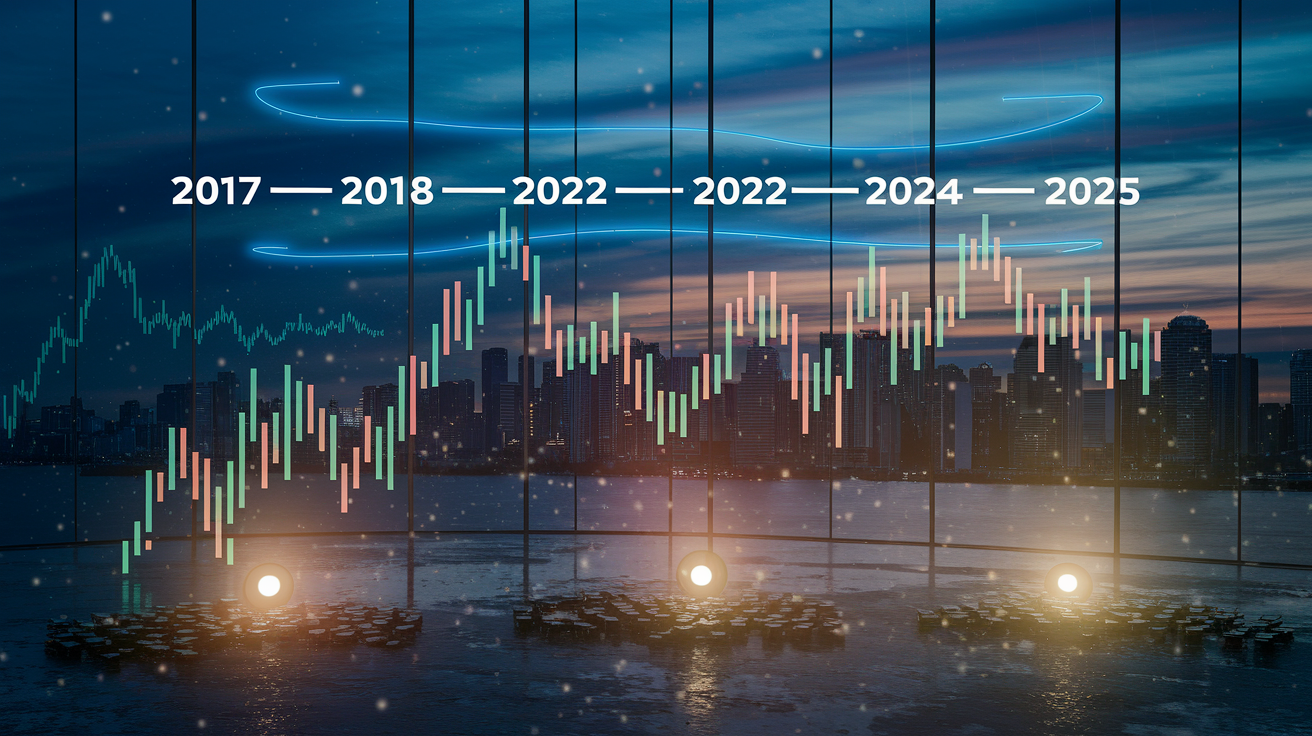
Historical rate cycles illustrate how different Fed actions produce distinct outcomes across equities and crypto. The 2017 to 2018 tightening cycle saw the Fed raise rates nine times, lifting the federal funds rate from near zero to 2.50 percent. Equities peaked in early 2018, then sold off sharply in Q4 2018 as the Fed continued hiking despite slowing growth. Bitcoin fell from nearly 20,000 dollars in late 2017 to under 4,000 dollars by late 2018, driven by tighter liquidity and waning retail speculation. The emergency rate cuts in March 2020 reversed everything, dropping rates to zero and launching massive quantitative easing. Equities rallied sharply from the March lows. Bitcoin surged from under 5,000 dollars to over 60,000 dollars by April 2021. The 2022 inflation driven hikes produced the sharpest tightening in decades, with 11 rate increases pushing the Fed funds rate from 0.25 percent to over 5.00 percent. Stocks fell into a bear market, and crypto plunged as liquidity dried up and leveraged positions unwound.
| Year | Fed Action | Market Reaction |
|---|---|---|
| 2017–2018 | Nine rate hikes to 2.50% | Equities peaked early 2018; Bitcoin fell from ~20K to ~4K |
| 2020 | Emergency cuts to 0%, QE restart | S&P 500 rebounded 65% from March low; Bitcoin rallied to 60K+ |
| 2022 | 11 hikes to over 5.00% | Bear market in stocks; crypto drawdown exceeded 70% from peak |
| 2024–2025 | Six cuts; pause at 3.50–3.75% | S&P 500 +23% in 2024, +16% in 2025; Bitcoin recovered to new highs |
These examples show that Fed pivot points matter more than individual rate moves. Markets often rally after the final rate hike, well before the first cut, because forward expectations drive positioning. Crypto historically outperforms after tightening ends, not when cuts begin, because the removal of rate pressure restores risk appetite faster than the actual easing delivers incremental liquidity.
Differences in How Stocks and Crypto Respond

Equities and crypto both qualify as risk assets, but they respond to Fed policy through fundamentally different mechanisms. Stocks are claims on corporate cash flows, so their prices reflect discounted future earnings, expected profit growth, and sector specific fundamentals. A rate cut boosts equity valuations by lowering discount rates and improving financing conditions for companies. Sectors like technology and consumer discretionary, which rely on future growth and carry higher debt loads, see the largest gains. Defensive sectors like utilities and consumer staples move less because their valuations depend more on stable dividends than growth expectations. Historical data shows the S&P 500 posted 24 percent gains in 2023 and 23 percent in 2024, driven partly by the Fed pausing hikes and later signaling cuts, which supported growth stock multiples and corporate profit margins.
Crypto operates differently because digital assets produce no earnings, dividends, or intrinsic cash flows. Bitcoin and Ethereum trade on network adoption, scarcity narratives, and speculative demand rather than discounted earnings models. This makes crypto extremely sensitive to liquidity conditions and global risk appetite. When the Fed eases, cheaper credit and weaker dollar dynamics pull capital into speculative assets, and stablecoin inflows accelerate as traders rebuild leverage. When the Fed tightens, margin calls force liquidations, funding rates turn negative, and speculative positions unwind quickly. Crypto volatility during Fed cycles far exceeds equity volatility because leverage ratios in digital asset markets run higher and liquidity is thinner. Bitcoin fell over 70 percent during the 2022 tightening cycle, while the S&P 500 dropped roughly 25 percent. That illustrates how crypto amplifies both upside and downside moves tied to Fed policy shifts.
Structural differences also shape reaction speed and persistence. Equities often price in expected Fed moves weeks or months ahead, smoothing intraday volatility around announcements. Institutional positioning, options hedging, and corporate buyback programs provide stabilizing flows that buffer equity markets from sharp reversals. Crypto doesn’t have these buffers. Retail dominated order books, thin liquidity during volatile windows, and the absence of corporate support mechanisms mean crypto can swing 5 to 10 percent within hours of a Fed announcement. Long term, equities rely on earnings growth and macro fundamentals to sustain gains, while crypto depends on network adoption, regulatory clarity, and institutional participation. Fed policy sets the liquidity backdrop, but sector rotation within equities and network specific developments within crypto determine which assets outperform once the initial rate shock passes.
Liquidity, Risk Appetite, and Investor Behavior
Fed rate decisions directly shape investor psychology and capital allocation by altering the trade-off between risk and reward. Lower rates compress yields on cash and bonds, forcing investors to seek higher returns in equities, commodities, and crypto. Risk appetite rises because the opportunity cost of holding speculative assets falls and leverage becomes cheaper. Exchange volumes increase, ETF inflows accelerate, and volatility based trading strategies proliferate as traders bet on momentum. Higher rates reverse this dynamic, making cash and short term Treasuries competitive again and raising the cost of margin loans, which reduces speculative positioning and narrows bid ask spreads in thinner markets.
Institutional positioning shifts around FOMC meetings follow a predictable sequence tied to forward guidance and rate expectations. Hedge funds and proprietary trading desks often reduce gross exposure ahead of announcements to limit event risk, then rebuild positions based on whether the outcome is more hawkish or dovish than expected. Retail traders tend to overreact to headlines, buying aggressively on dovish surprises and selling sharply on hawkish signals, which amplifies short term volatility. Crypto markets show this pattern more clearly than equities because retail participation remains high and leverage ratios on perpetual futures can exceed 10x. When the Fed paused cuts on January 28, 2026 at 3.50 to 3.75 percent, Bitcoin tested a technical support level at 69,143 dollars and funding rates on exchanges turned slightly negative, signaling reduced speculative demand as traders priced in fewer near term cuts.
The behavioral sequence surrounding Fed announcements typically unfolds in three stages. Pre-announcement positioning sees traders reduce leverage, hedge volatility exposure, and close short term directional bets to avoid being caught on the wrong side of a surprise. This often compresses realized volatility in the days before the meeting. Immediate reaction means markets move within minutes based on whether the rate decision and forward guidance are more hawkish or dovish than expected. Fed chair press conferences often matter more than the rate number itself because they reveal the committee’s inflation and labor market outlook. Post-announcement drift involves medium term trends developing over days and weeks as investors reassess forward rate expectations, adjust duration exposure, and rebalance portfolios based on updated economic projections. This is when underlying fundamentals like earnings growth or onchain activity regain importance relative to the initial policy shock.
Key Insights for Traders and Long-Term Investors

Positioning around Fed announcements requires balancing event risk with the reality that most policy moves are priced in ahead of time. Futures markets typically reflect the expected rate decision days or weeks before the FOMC meeting, so the actual announcement often produces smaller moves than the forward guidance and press conference remarks. Traders who wait for the headline number miss the opportunity to position on expectations and often chase moves that have already begun. The better approach involves tracking interest rate expectations through CME FedWatch probabilities, monitoring changes in forward guidance language, and watching how Treasury yields and the dollar react to incoming inflation and labor data between meetings.
Managing volatility during FOMC windows means avoiding excessive leverage and ensuring trading infrastructure can handle fast execution and clear pricing. Crypto markets often see spreads widen and liquidity thin out during the minutes surrounding a Fed announcement, which can lead to slippage on larger orders and forced liquidations if stop losses are triggered by brief spikes. Reducing position sizes or using options to hedge directional exposure can limit downside while preserving upside participation. Equities show more stability, but growth stocks and small caps still see elevated intraday swings, especially if the Fed signals a more hawkish or dovish path than consensus expected. Investors holding diversified portfolios across stocks, bonds, and alternative assets benefit from rebalancing after sharp Fed driven moves rather than trying to trade every headline.
Long term investors should focus on the broader policy cycle rather than individual rate decisions. Historical patterns show that equities and crypto tend to perform best after the Fed completes a tightening cycle, not when cuts begin, because the removal of rate pressure restores confidence and liquidity before the economic slowdown becomes severe. The period after the final rate hike in a cycle has historically produced strong returns as markets price in the eventual pivot to easing. Patient positioning during late stage tightening and early pauses often outperforms reactive trading around each individual cut. Understanding the difference between short term policy noise and the longer term shift in liquidity conditions helps investors avoid overreacting to headlines and maintain disciplined allocation strategies through volatile Fed cycles.
Final Words
Fed decisions move markets: rate changes tighten or ease liquidity, lift discount rates, and shift risk appetite. That pressure hits stock valuations and changes crypto demand.
We covered market reactions, transmission channels, historical examples, stock vs crypto differences, liquidity and investor behavior, and practical takeaways for traders and long‑term investors.
Bottom line: how fed rate decision moves equities and crypto — by altering liquidity, borrowing costs, and valuations — so focus on sizing, hedges, and forward guidance. Stay prepared; opportunities show up for disciplined investors.
FAQ
Q: How do Fed interest rates affect cryptocurrency?
A: Fed interest rates affect cryptocurrency by changing liquidity, dollar strength, and investor risk appetite; higher rates drain liquidity and trigger leverage unwinds, while lower rates boost speculative flows and crypto demand.
Q: What happens to equities when the Fed cuts rates?
A: When the Fed cuts rates, equities often see higher valuations as discount rates fall, borrowing costs drop, and risk appetite rises; growth and other rate‑sensitive sectors typically benefit most.
Q: What happens to crypto when interest rates come down?
A: When interest rates come down, crypto tends to benefit from easier liquidity, renewed leverage, and stronger risk‑on flows, which can push prices up, though growth and dollar moves still influence outcomes.
Q: How does the Fed fund rate affect the stock market?
A: The Fed funds rate affects the stock market by setting the discount rate, changing borrowing costs and earnings forecasts, and shifting investor positioning, with higher rates compressing valuations and lower rates expanding them.